As a Spanish language tutor, I first noticed it was Jeevi (one of my adult students from Singapore), then I saw it was also happening with Esther (one of my teenage students from Singapore). These were followed by Jacquie (one of my adult students from Scotland)…
The ease, speed, and enjoyment with which they acquired the Spanish language were astonishing.
For example, I had our classes planned with a sequence of activities that lasted an hour, and normally on average, we finish them about 10 minutes ahead of schedule.
Well, I thought, there are people who are very good at music, at math, at art… There are also people who are above average at learning Spanish.
Then…
I read an article written by the great Rachel Paling, the founder of the Neurolanguage Coaching® method and one of the world’s leading experts on the relationship between brain activity and language acquisition.
And everything started to make more sense.
As a Spanish language tutor, I primarily work with my students in one-on-one classes. This allows me to identify each student’s unique learning style by observing them closely, listening to them, and understanding them, during every class. Well, in the case of Jeevi, Esther, and Jacquie, three students who were able to remember, connect, and generate words and messages in Spanish with great ease, I thought: ‘What do they have in common?’
The answer:
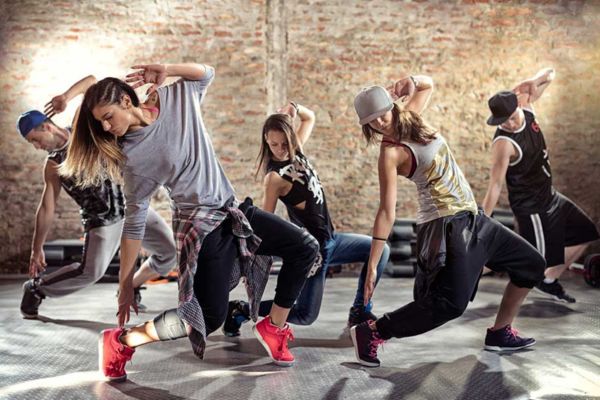
The three of them have been dancing intensely and consistently for years.
Dance, rhythm, coordinated physical movement, and body balance training have been part of their lives for decades (well, not yet in Esther’s case, since she’s only 14 :)).
And here’s the scientific evidence:
The cerebellum, the part of the brain that controls balance, posture, and voluntary movements, is also the part of the brain that determines verbal fluency and the ability to recognize and correct language mistakes, and it is also connected with writing skills.
And guess what?
Science has shown that the size of the cerebellum in people who have been practising physical activities that require coordination, rhythm and body balance for years is slightly larger than those who don’t.
Ta-da!
There’s a scientific explanation to this!
This doesn’t mean that, as a Spanish language tutor, I’m going to start recommending that all my students take up dancing, yoga or skating professionally :))
Don’t panic!
But perhaps I can recommend that people who have been dancing, doing yoga, or skating for years, whether more or less intensely and constantly, to start studying languages too.
I always say that learning a new language is to our brain what physical exercise is to our body.
And in a world where life expectancy (depending on the country) is around 84 years (data for Spain in 2026), we clearly need to take care of our bodies and our brains to age in the best possible physical and mental condition.
As a Spanish language tutor, I’d like to go a little deeper into the role of the cerebellum in language learning and communication fluency.
The cerebellum is relatively small compared to other parts of the brain, making up only 10% of its total weight.
But…
It contains more than half of the brain’s neurons!
Regarding language learning, this is what Rachel Paling covers in her article:
“Relating to motor control and language connection, researchers are now proposing that the cerebellum’s involvement in coordinating precise motor actions may contribute to the articulation and pronunciation skills, both essential for language fluency, thus demonstrating a close connection between motor control and language development.
It also appears that this part of the brain is managing timing and sequencing, both essential for language processing. This helps us get the rhythm, intonation, and pacing of a language, facilitating better communication and comprehension.
In addition, it seemingly plays a vital role in error correction, so when we are learning a language, we can adjust pronunciation and mistakes over time.
We also know that it is involved in the consolidation of procedural memory, facilitating the retention of language-related motor skills, so the ability to recall and apply grammar rules and vocabulary in real-time communication is enhanced.”
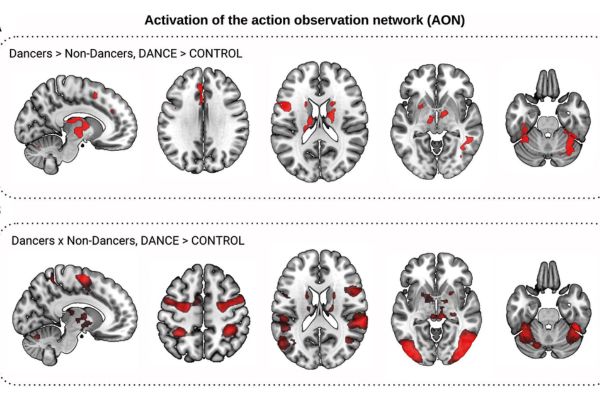
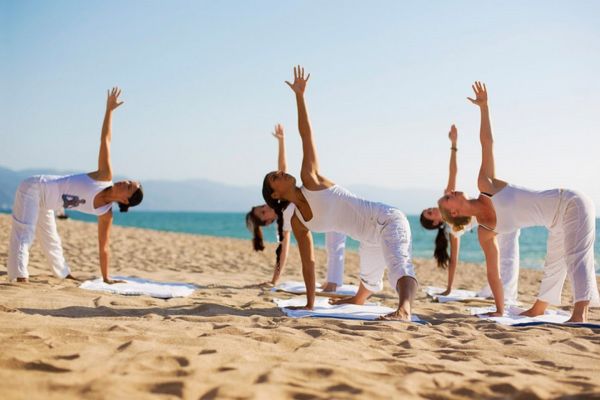
Scientific studies have shown that the brains of dancers, yogis, skaters, gymnasts,… have a rather unique structure and function: their gray matter volume and activity in the cerebellum, motor cortex, and somatosensory cortex are significantly greater.
This makes perfect sense considering they spend years and years training and developing movement, coordination, rhythm, and balance skills.
Wouldn’t it be fantastic if they used this advantage to learn new languages?
But in addition to the physical and brain benefits of disciplines like dance or yoga, the advantages of these types of physical activities don’t end there.
Jeevi – Founder of Afro With Jeevi
‘When I see people smiling throughout class, or when I receive heartfelt messages about how Afrodance has helped someone heal, reconnect with their body, or rediscover joy in movement, I’m reminded of how powerful this practice truly is. There’s a visible shift where people arrive tired or stressed and leave energized, grounded, and glowing. It’s more than exercise; it’s emotional release and connection. Research echoes these experiences. Studies like “African Dance Is My Therapy” and “The Power of Dance” show that dance enhances mental stamina, memory, and confidence while encouraging self-expression, resilience, and community. Through rhythm and shared movement, Afrodance, more specifically, becomes a celebration of culture, growth, and human connection.’

Daniela – Yoga Instructor
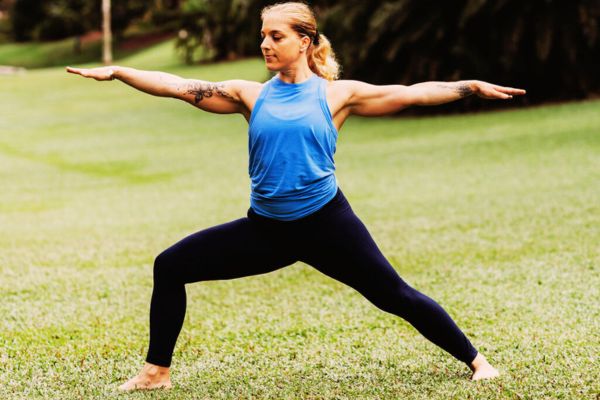
‘I have been active my entire life, and movement has always been a big part of my identity. But my real transformation happened when I discovered Yoga. This practice offers a holistic path to well-being that extends far beyond just physical activity, moving from doing to being and from pushing to surrender. Yoga cultivates focus, clarity and calm through mindful breathing and being fully present in the moment. I have observed how my students have become more present, gentler towards themselves and emotionally resilient. I believe that by facing difficulties on our mat during our practice, we are able to approach difficulties in our everyday lives with more compassion and mindfulness. There is also a social aspect to sharing this practice with others. It facilitates a sense of belonging and mutual support. With every class I teach, I am reminded of how transformational this practice can be for body, mind and spirit.’
Farzana – Founder of The Desi Groove
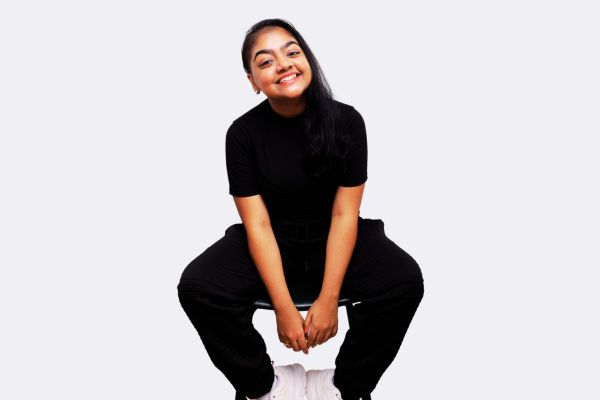
‘When I started The Desi Groove, I wanted to create more than just dance classes. I wanted a space where people could feel truly alive, both adults and children. I’ve seen how dancing, be it in a fitness or choreography class, lifts your mood, clears your mind, and sparks confidence you didn’t know you had. Many who come to my class don’t even understand the language, but is able to connect to it instantly. Dance is my way of helping others to release stress, express themselves, and connect with others who share the same energy and joy. My students have shared with me how dance classes helped them, even in terms of feeling a sense of belonging. It’s like a third home after family and work/school. It isn’t just the dance that people stay for. It’s about celebrating the fact that we are taking care of ourselves while creating laughter, community, and moments that stay with you long after class ends.’
As a Spanish language tutor, I constantly repeat this phrase to my students:
“Learning a new language is to your brain what physical activity is to your body.”
This BBC video, which became popular a few years ago, clearly describes the three beneficial characteristics that multilingual brains have compared to monolingual brains.
But, just as important as being aware of the care and maintenance of our brain is understanding one of the conclusions described in the video:
You do not need to grow up bilingual to gain cognitive benefits from learning new languages.
In fact, according to Dr. Jon Android Duñabeitia, the mental effort required to learn a second language in adulthood, when your brain is monolingual, is enormous. And that has a tremendous positive effect on your brain health.
And if you’ve been dancing, doing yoga, skating, doing gymnastics… intensely, almost professionally, for years, remember that you already have a secret weapon in your brain for learning, remembering, and enjoying learning new languages in an amazing way.